Beginner
Routes the applicant as unqualified and applies the appropriate Kit tags.
 RELIX
Workflow Automation & Integration
One application. Four paths. One connected workflow.
A consolidated mentorship application workflow connecting Gravity Forms, Kit, Google Sheets, Slack, and Pipedrive, with conditional qualification and UTM attribution.
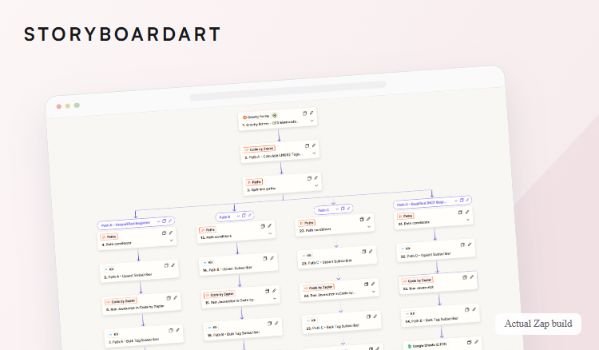
I rebuilt and consolidated the mentorship application automation for StoryboardArt.org into a single live workflow connecting Gravity Forms, Kit, Google Sheets, Slack, and Pipedrive.
The previous setup was spread across several separate Zaps for application logging, qualification, Kit tagging, and Pipedrive deal creation. The goal was to simplify the workflow without changing the existing sales process, while preventing duplicate records and keeping UTM attribution working correctly.
A single mentorship application needed to support several different outcomes. Applicants could be disqualified because they were beginners, were not ready to invest, or had less than five hours available each week. Qualified applicants needed to continue into the sales pipeline.
Each result also had to update several services correctly:
The existing automation was divided across multiple overlapping Zaps, which made the process harder to maintain and increased the risk of duplicate processing.
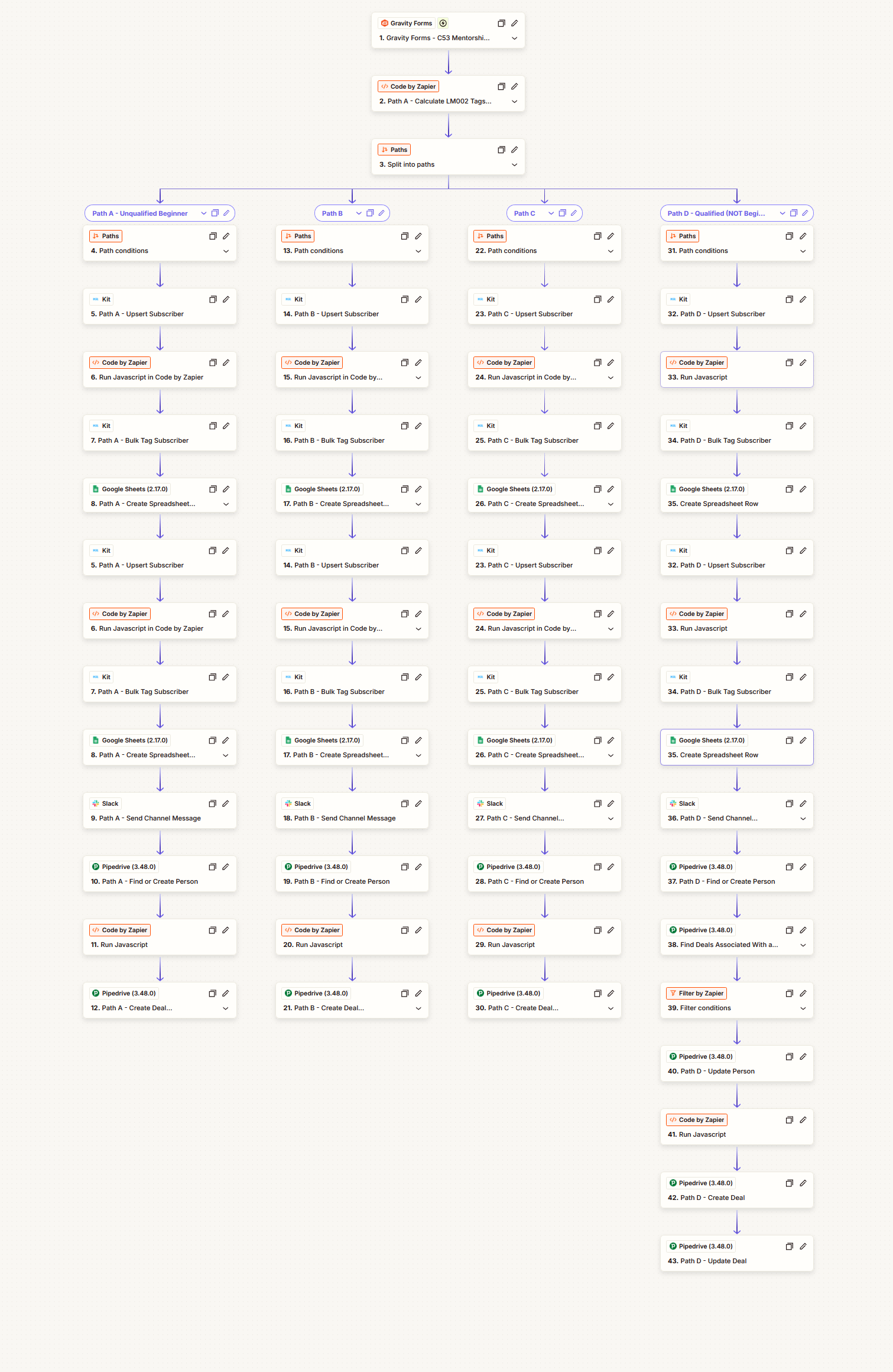
I consolidated the application workflow into one main Zap with four conditional paths:
Routes the applicant as unqualified and applies the appropriate Kit tags.
Routes applicants who are not currently able to invest.
Routes applicants with less than the required weekly availability.
Creates or updates the applicant in Pipedrive and routes the opportunity into the active Mentorship sales pipeline.
Each path handles its own Kit tagging, Google Sheets logging, Slack notification, and Pipedrive processing.
For qualified applicants, the automation also checks for an existing Pipedrive deal before creating a new one, updates the person record with the application answers, creates the qualified deal, and updates the deal with the required application data.
The actual Zap build shows the Gravity Forms trigger, conditional routing, and connected services across all four paths. Select the screenshot to enlarge it.
I also validated the full UTM attribution flow after the consolidation. Gravity Forms captures the five campaign parameters:
utm_sourceutm_mediumutm_campaignutm_termutm_contentThese are passed into Kit through the existing C53 attribution workflow and stored in Kit’s referrer_utm_parameters.
A live test confirmed all five UTM values reached Kit correctly after the consolidation.
I ran live submissions through all four application paths before completing the migration. The tests verified:
During QA, I found and corrected several mapping issues, including deal-title formatting, deal value placement, the App Submitted? field, and a duplicated email mapping in the qualified Google Sheets path.
After the fixes, all four paths passed the live validation.
The C53 mentorship application now runs through one consolidated automation instead of several overlapping application-processing Zaps.
The final workflow was tested live across every qualification path, UTM attribution was confirmed in Kit, and the old overlapping Zaps were disabled and retained only as rollback options.
The result is a simpler, easier-to-maintain application pipeline with consistent routing from Gravity Forms through Kit, Google Sheets, Slack, and Pipedrive.
Let’s connect the forms, records, notifications, and sales tools your team relies on.
Discuss your project →